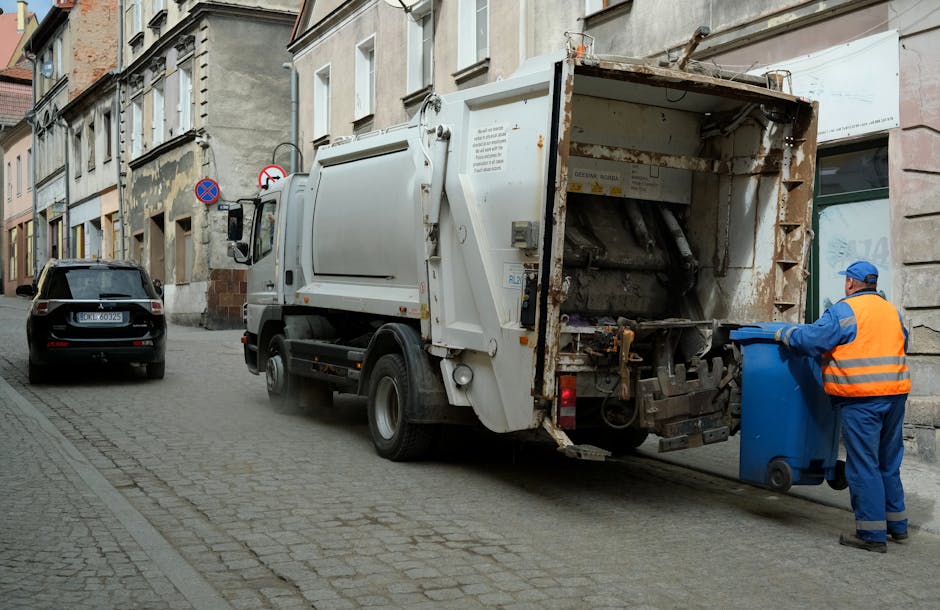
Forest Gate Station commercial rubbish removal for shops
If you run a shop near Forest Gate Station, rubbish builds up faster than most people expect. Cardboard from deliveries, broken display fittings, old stock, food packaging, shrink wrap, storage clutter, end-of-line waste, the lot. And once it starts sitting in the back room or spilling into a narrow yard, it becomes more than an eyesore. It can slow staff down, create slip risks, and make the whole place feel a bit rough around the edges.
Forest Gate Station commercial rubbish removal for shops is about clearing that waste in a way that is quick, tidy, and suitable for a working business. Not a half-hearted tidy-up. Not a one-off panic move when the stockroom is already groaning. A proper shop waste removal approach that fits trading hours, protects the premises, and keeps your operation moving.
In this guide, we'll look at how it works, who it helps, what to watch out for, and how to choose the right approach for your shop. If you want a clean, practical overview without the fluff, you're in the right place.
Table of Contents
- Why Forest Gate Station commercial rubbish removal for shops matters
- How Forest Gate Station commercial rubbish removal for shops works
- Key benefits and practical advantages
- Who this is for and when it makes sense
- Step-by-step guidance
- Expert tips for better results
- Common mistakes to avoid
- Tools, resources and recommendations
- Law, compliance, standards, and best practice
- Options, methods, and comparison table
- Case study or real-world example
- Practical checklist
- Conclusion
- Frequently asked questions
Why Forest Gate Station commercial rubbish removal for shops Matters
Shops around a busy station area tend to produce waste in bursts. Morning deliveries arrive, packaging piles up, a fixture gets replaced, then suddenly there's more rubbish than the back office, store cupboard, or bin store can comfortably hold. That's especially true for convenience stores, barber shops, salons, small retailers, takeaways, charity shops, vape stores, off-licences, and independent boutiques.
In a location like Forest Gate Station, where footfall, narrow access, and time pressure can all matter, rubbish removal becomes a small operational detail with a big impact. If the waste is handled badly, you notice it everywhere: blocked paths, staff having to step around bags, unhappy neighbours, and a shopfront that looks tired before lunch. Not ideal.
Commercial rubbish removal for shops is different from ordinary household waste disposal. You're dealing with mixed materials, recurring clearances, and the need to keep trading with minimal interruption. In plain English, you need the waste gone without turning the day into a mess.
There's also the reputational side. Customers may never comment directly, but they absolutely notice when a shop looks cluttered or neglected. A clean store room, sorted waste area, and clear loading route send the opposite message: this place is organised, cared for, and safe to enter.
Practical takeaway: the best rubbish removal setup for a shop is not simply "fastest available". It is the one that keeps trading smooth, protects staff safety, and removes waste at the right time, in the right way.
How Forest Gate Station commercial rubbish removal for shops Works
The process is usually straightforward, but the details matter. A good commercial rubbish removal service will start by understanding what needs clearing and how the shop is laid out. A compact corner store with a rear alley has different needs from a high-street boutique with limited rear access and shared bins. Obvious, maybe, but it's where many jobs go wrong.
Typically, the process follows a simple sequence:
- Initial assessment - You describe the waste type, volume, access conditions, and any awkward items such as shelving, broken fixtures, old pallets, or bulky packaging.
- Quote and scheduling - The job is priced based on the amount and kind of waste, time required, and access difficulty. For shops, timing often matters as much as price.
- Arrival and safe loading - The team arrives with the right vehicle and equipment, then moves the waste carefully so it does not disrupt customers, staff, or neighbouring businesses.
- Segregation where practical - Recyclable materials such as cardboard, metal, and some plastics are separated when possible. This supports better handling and sustainability.
- Removal and disposal - Waste is taken away for appropriate processing, with care taken around restricted access, stairwells, or shared entrances.
- Final tidy-up - The area should be left swept, clear, and ready for business use again. A decent job finishes cleanly. That part matters more than people think.
In practice, the best jobs are planned around shop opening hours. Early morning, late evening, or quieter trading windows are often best. There's nothing glamorous about shifting old cardboard beside a customer queue while someone is trying to pay for a newspaper. Better to avoid that if you can.
If your business needs a broader clear-out, it can help to review the company's pricing and quotes information before booking, so you know what affects cost and how to frame the job clearly.
Key Benefits and Practical Advantages
The main benefit is obvious: rubbish disappears. But the real value goes further than that. Shops near Forest Gate Station tend to work in tight spaces, so every square metre counts. Once waste starts taking over storage or rear access, it starts costing you time in small, irritating ways.
Here are the practical advantages worth paying attention to:
- Less disruption to trading - Staff spend less time managing bins and more time serving customers.
- Better use of space - Stockrooms, cupboards, and rear yards stay usable.
- Improved presentation - A clean shop and tidy frontage feel more professional.
- Safer working conditions - Fewer trip hazards, blocked walkways, and awkward lifting jobs.
- More predictable waste handling - Instead of waiting for bins to overflow, waste is removed on a planned basis.
- Reduced stress for staff - That sounds soft, but it is real. Staff hate having to work around waste piles.
For a shop owner, a tidy waste routine can also make maintenance easier. Deliveries are simpler to receive, cleaning is quicker, and stock rotation becomes less chaotic. Truth be told, clutter tends to spread. Clear the rubbish and you often clear the headspace too.
Where sustainability matters, a provider that focuses on recycling can help divert more material away from general waste. You can also read more about the company's approach on the recycling and sustainability page.
Who This Is For and When It Makes Sense
This service makes sense for any shop that regularly produces commercial waste, but it is especially useful if you are in one of these situations:
- You have recurring cardboard and packaging waste from deliveries.
- You are refurbishing the shop, changing displays, or replacing fixtures.
- Your bin store is full before collection day.
- You share rear access or loading space with other businesses.
- You need a one-off clear-out after stock changes or seasonal trading.
- You want to remove bulky items that normal bins cannot take.
- You are preparing for an inspection, handover, or reopening.
It is also useful if you run a business that accumulates mixed waste throughout the day. Think packing materials, broken hangers, damaged stock, old signage, expired point-of-sale items, or worn display units. Some of those pieces are small, but they add up quickly. By Friday evening, the back room can look like a tiny shipwreck.
If your concern is broader than just rubbish and you want to understand the business background, the about us page is a sensible place to see who you're dealing with. For any direct next step, the contact us page is there when you are ready.
Step-by-Step Guidance
If you want the smoothest result, a little planning goes a long way. You do not need a complicated system. Just a clear process, a realistic time slot, and a basic understanding of what is being removed.
1. Identify the waste types
Start by separating what you have: cardboard, plastic wrap, mixed retail waste, broken shop fittings, old stock, and anything unusual. If there are heavy or awkward items, mention them early. It helps avoid surprises, which nobody enjoys at 8:00 a.m.
2. Estimate volume honestly
A common mistake is underestimating how much waste a shop actually holds. One corner of stacked boxes can look manageable until you start moving it. A realistic estimate leads to a better quote and fewer delays on the day.
3. Check access
Look at door width, staircases, lifts, rear access, loading restrictions, and whether there's space for a vehicle nearby. Forest Gate Station is a busy area, so access and timing can matter more than the rubbish itself.
4. Choose a sensible collection window
Pick a time that keeps customers out of the way. Early mornings before opening or after closing are often best. If your shop is on a busy stretch, even a short collection can feel disruptive if the timing is wrong.
5. Prepare the area
Move the waste into one easy-to-reach area if that is safe to do. Keep a walkway open. Label anything sensitive. And if there are items you want to keep, separate them before the team arrives. Sounds basic, but yes, people still accidentally pile "keep" and "remove" together. It happens.
6. Ask about recycling and disposal
It is fair to ask how the material will be handled. Cardboard and some metal items are often suitable for recycling. Mixed waste may need different treatment. A responsible provider should be able to explain the general approach without making a big song and dance about it.
7. Confirm the paperwork and payment details
Before the job goes ahead, check the terms, payment method, and what the quoted service includes. The payment and security page gives a useful overview of how that side is handled.
Expert Tips for Better Results
Here's where a bit of experience saves time and money. The difference between an average clearance and a smooth one is usually not dramatic. It's the small habits.
- Keep recycling separate where possible. Cardboard and clean plastic film are much easier to handle when they are not mixed with general waste.
- Use consistent storage points. If rubbish always goes in the same place, staff do not waste time hunting for it later.
- Book before a busy trading period. Holiday rushes, stock changes, and promotional resets always create more waste than expected.
- Photograph awkward items before booking. It helps describe the job clearly and avoids misunderstanding.
- Plan around deliveries. Don't schedule removal at the same time as cages, pallets, or stock drop-offs if you can avoid it.
- Keep one person in charge on the day. Too many voices create confusion. One contact, simple instructions, job done.
One small but useful habit: walk the back area with a cup of tea and look at it as if you've never seen it before. You'll spot trip hazards and waste clusters more quickly. Slightly old-school, but it works.
If your priorities include safety and site care, it is worth reading the company's health and safety policy and insurance and safety information so you know what standards you should expect.
Common Mistakes to Avoid
Most rubbish removal problems are preventable. The tricky part is that people only notice the mistake once the job has already become awkward.
- Leaving everything until the last minute. A stockroom full of waste the night before a delivery is not a nice feeling.
- Assuming all waste is the same. Retail packaging, bulky items, fixtures, and mixed general waste are handled differently.
- Blocking exits or fire routes. Even temporarily, this is a poor idea and can create a serious safety issue.
- Not checking access restrictions. A clearance crew can only work as efficiently as the site allows.
- Forgetting about neighbours or shared premises. Noise, vehicles, and loading areas can affect others nearby.
- Choosing purely on price. Cheap can turn expensive if the team is unprepared or the job runs over.
Another common slip is not being clear about what stays and what goes. If you have old shelving that looks like waste but still needs to be reused, label it. Trust me, it saves an awkward conversation later. Not the end of the world, but better avoided.
Tools, Resources and Recommendations
You do not need a warehouse full of kit to manage shop waste well. A few simple tools and habits are enough for most small businesses.
Useful tools for shop waste management
- Stackable bins or containers for separating cardboard, general waste, and recyclables.
- Labels and tape to mark keep/remove areas during a clear-out.
- Hand trolleys or sack trucks for moving bulky but manageable items safely.
- Heavy-duty sacks for mixed retail waste and packaging debris.
- Basic gloves and cleaning supplies for preparing the area before collection.
- A simple waste log if your shop produces regular recurring rubbish and you want better control.
For business owners who want to compare costs before committing, the pricing and quotes page is a practical reference point. It is also sensible to check the terms and conditions so you understand what is included in the service and what might count as an extra.
And if you care about the bigger picture - which many shop owners do, increasingly - the recycling and sustainability information can help you think about waste as something to manage better, not just dump and forget.
Law, Compliance, Standards, and Best Practice
This section matters because commercial rubbish removal is not just a practical task; it touches on safety, duty of care, and responsible waste handling. I'll keep this plain English, because the legal side can become a swamp very quickly.
In the UK, businesses are generally expected to manage their waste responsibly and use lawful disposal routes. For shop owners, that means you should not assume all waste can go into domestic-style collection, and you should be careful about who removes it and how it is handled. If waste is mixed, bulky, or commercial in nature, it deserves proper attention.
Best practice normally includes:
- keeping waste stored safely and away from customer areas
- avoiding obstructions to fire exits and routes
- separating recyclables where reasonable
- using a provider that can explain its process clearly
- making sure the team has suitable insurance and works safely on site
- keeping clear records of the service, especially for recurring clearances
That last one is often overlooked. A small shop may not feel the need for much admin, but when rubbish collections become regular, a simple record helps you stay organised and spot patterns. Are your cardboards taking up too much time? Is one area always overflowing? Once you track it, the problem gets easier to solve.
If you want to see how complaints, privacy, accessibility, or policy details are handled by the business behind the service, the relevant pages are available: complaints procedure, accessibility statement, privacy policy, and cookie policy.
One more thing: if a shop has particularly awkward access or handling needs, it is sensible to ask whether the provider follows a written safety process. Not because every job is risky, but because a tidy, careful approach usually reflects a more reliable operation overall.
Options, Methods, and Comparison Table
Shop owners usually have a few ways to deal with rubbish. Some are fine for light use, while others are much better for busy commercial premises. Here's a simple comparison.
| Option | Best for | Pros | Limitations |
|---|---|---|---|
| Standard bins and scheduled collections | Low-volume, predictable waste | Simple, familiar, low effort | Can overflow quickly during busy trading periods |
| One-off commercial rubbish removal | Clear-outs, refurbishments, bulky waste | Fast reset, flexible timing, removes large volumes | Not ideal if waste is constant every single day |
| Regular planned clearances | Shops with steady packaging or stock waste | Keeps storage under control, less build-up | Requires routine planning and a consistent budget |
| Ad hoc staff handling only | Very small amounts of waste | No external booking needed | Can become unsafe, inefficient, and messy quite quickly |
For many shops near Forest Gate Station, the best option is a mix: routine bins for everyday waste, plus occasional commercial clearance for the overflow. That balance tends to work well in real life. Simple, but not simplistic.
Case Study or Real-World Example
Here's a typical scenario. A small independent shop near the station has just completed a seasonal refresh. New shelves arrived, old display stands were replaced, and several boxes of outdated packaging were still sitting behind the counter. By Thursday afternoon, the store room had become hard to use properly, and staff were moving items twice just to reach stock.
The owner needed a clearance that wouldn't disrupt the next day's trading. The sensible approach was to group the waste by type, clear a single access route, and book a collection for an early morning slot before opening. The team removed the old fittings, the packaging, and the accumulated clutter from the back room in one visit. The shop reopened with a cleaner stock area and less stress for everyone.
What made the difference? Planning, mainly. Nothing dramatic. Just a clear description of the waste, a realistic understanding of access, and a collection time that fit the shop rather than forcing the shop to fit the collection. Simple idea, but it saves a lot of hassle.
That sort of result is common when the job is handled properly. The "before" often feels chaotic; the "after" feels strangely calm. You can hear the difference in a room like that. Less scraping, less shuffling, less sighing. More room to work.
Practical Checklist
Before booking Forest Gate Station commercial rubbish removal for shops, run through this quick checklist. It takes a few minutes and can prevent a lot of back-and-forth later.
- Have I listed the main waste types?
- Do I know roughly how much needs removing?
- Is there anything heavy, awkward, or fragile?
- Have I checked access, stairs, and loading space?
- Have I chosen a time that won't disrupt trading?
- Are recyclable items separated where practical?
- Have I removed anything I want to keep?
- Do staff know who the point of contact is on the day?
- Have I checked the price, payment, and service terms?
- Do I understand what happens to the waste after collection?
Quick reminder: a five-minute prep check can save a whole afternoon of awkward moving around, especially in a compact shop. Worth it every time.
Get a free quote today and see how much you can save.
Conclusion
Forest Gate Station commercial rubbish removal for shops is really about keeping a business usable, safe, and presentable without wasting time on avoidable clutter. When the waste is handled properly, the whole shop feels better: the stockroom works, the front looks sharper, and staff can focus on customers instead of tripping over packaging.
That is the real point. Not just "taking rubbish away", but giving the business a clean reset whenever it needs one. Whether you're clearing post-delivery cardboard, replacing old fittings, or dealing with a full shop clear-out, the best results come from clear planning and a provider that understands commercial spaces.
If you want a dependable next step, explore the service details, review the pricing information, and get in touch when you're ready. A tidy shop is easier to run. It really is that simple.
And once the clutter's gone, you usually notice something else too: the place feels lighter. A bit easier to breathe in. Which, to be fair, is exactly what a busy shop needs now and then.
Frequently Asked Questions
What is commercial rubbish removal for shops near Forest Gate Station?
It is the collection and disposal of business waste from retail premises, including cardboard, packaging, old stock, fixtures, and general shop clutter. It is designed for commercial spaces, not domestic bins.
How is this different from regular bin collection?
Regular bin collection deals with routine waste in smaller amounts. Commercial rubbish removal is better for bulky, mixed, or one-off waste and is often arranged around the shop's access and trading hours.
Can you remove cardboard and retail packaging?
Yes, that is one of the most common shop waste types. Clean cardboard and packaging are often suitable for recycling, while mixed or contaminated waste may need different handling.
Do I need to sort the waste before collection?
Sorting helps, but it is not always essential. If you can separate recyclable material from general waste, it usually makes the process smoother and more efficient.
How much does shop rubbish removal cost?
Costs vary depending on the volume, weight, access, and waste type. A precise quote is usually based on the details of the job rather than a fixed one-size-fits-all rate.
Can you collect rubbish outside shop opening hours?
Often yes. Early morning or after-hours collection is usually the most practical option for shops that want to avoid disrupting customers and staff.
What kind of shop waste can be removed?
Common items include cardboard, packaging, damaged stock, old displays, shelving, fittings, mixed retail waste, and general clutter from stockrooms or storage areas.
Is commercial rubbish removal suitable for a small independent shop?
Absolutely. In fact, smaller shops often benefit the most because space is limited and waste can build up quickly behind the scenes.
What should I do before the clearance team arrives?
Separate anything you want to keep, clear access routes, group the waste in one place if safe, and make sure someone is available to confirm what should be removed.
How do I know the provider is handling waste responsibly?
Ask about their disposal process, recycling approach, insurance, and safety practices. A trustworthy provider should be able to explain these points clearly and without fuss.
Can bulky shop fittings and display units be removed too?
Yes, in many cases bulky fittings, old display units, and similar items can be collected as part of a commercial clearance, provided the job details are shared in advance.
What if I need to make a complaint or check policy details?
You can review the available policy pages, including the complaints procedure, privacy policy, and terms and conditions, so you know how the business handles those matters.