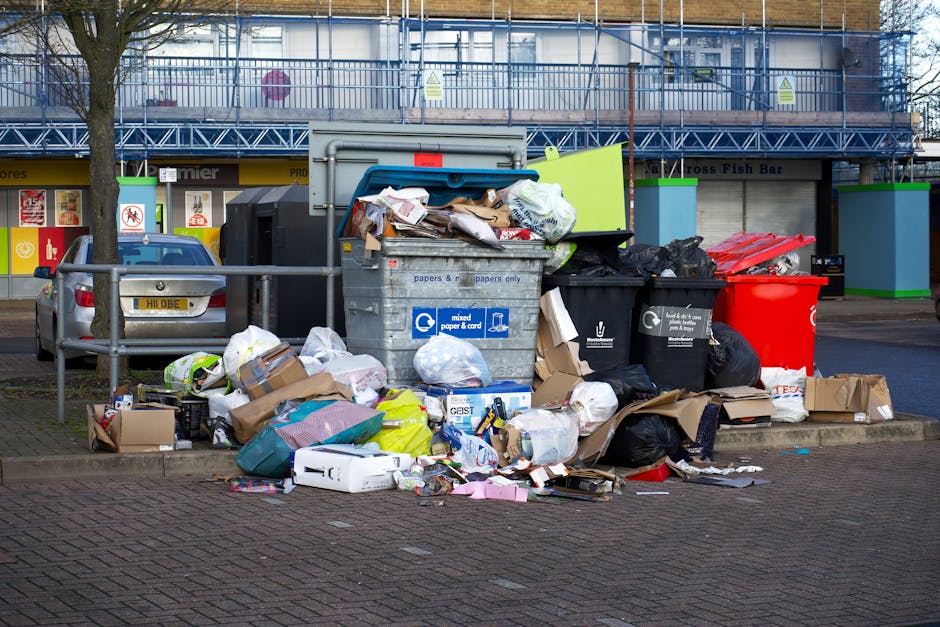
Woodgrange Road Skip Free Alternatives for Household Rubbish: Practical Local Options That Actually Work
If you live near Woodgrange Road and need to clear out household rubbish, a skip is not always the easiest or smartest choice. In fact, for many everyday jobs, Woodgrange Road skip free alternatives for household rubbish can be quicker, tidier, and far less disruptive. Whether you are dealing with a single bulky item, a few black bags after a weekend clear-out, or a loft full of forgotten clutter, there are sensible ways to get it done without having a large skip sitting outside for days.
This guide breaks down the best skip-free approaches, how they work in real life, and when each option makes sense. You will also find a comparison table, a step-by-step plan, a practical checklist, and the common mistakes that can turn a simple clear-out into a stressful one. Let's keep it simple. There's enough mess already.
Table of Contents
- Why Woodgrange Road skip free alternatives for household rubbish Matters
- How Woodgrange Road skip free alternatives for household rubbish Works
- Key Benefits and Practical Advantages
- Who This Is For and When It Makes Sense
- Step-by-Step Guidance
- Expert Tips for Better Results
- Common Mistakes to Avoid
- Tools, Resources and Recommendations
- Law, Compliance, Standards, or Best Practice
- Options, Methods, or Comparison Table
- Case Study or Real-World Example
- Practical Checklist
- Conclusion
- Frequently Asked Questions
Why Woodgrange Road skip free alternatives for household rubbish Matters
Not every household rubbish job needs a skip. Around Woodgrange Road, where parking can be tight and frontages are often shared with neighbours, a skip can create more hassle than help. You may need a permit, space on the road, and a few days of patience while the skip sits there getting in the way. If you are clearing just a few rooms, that can feel wildly disproportionate.
Skip-free rubbish removal matters because it fits real homes, real routines, and real time pressure. Maybe you are clearing a bedroom before a move. Maybe the washing machine has finally given up. Maybe the garage has become a shrine to broken ladders and half-used paint tins. In those moments, a full skip is often overkill.
There is also a practical side. Skip-free methods can reduce visual clutter, avoid neighbours having to walk around a metal box, and make the process feel more controlled. You sort what goes, what stays, and what can be reused or recycled. That sounds small, but it makes a difference.
Expert takeaway: If the waste comes from a home, is mixed, and is not a huge builder's load, skip-free removal is often simpler, faster, and easier to manage than hiring a skip.
How Woodgrange Road skip free alternatives for household rubbish Works
The basic idea is straightforward: instead of putting waste into a static skip, you use a collection method that removes the rubbish directly from your property or from the kerbside in a controlled way. That might mean a man-and-van collection, a pre-booked rubbish removal service, a household clear-out team, or a smaller one-off disposal arrangement.
In practice, the process usually looks like this:
- You identify what needs to go and separate any reusable items.
- You decide whether the rubbish is general household waste, bulky furniture, garden waste, or mixed clutter.
- You book a collection for a time that suits you.
- The team loads the items, often from inside the property, a loft, a flat, a shed, or a driveway.
- The waste is taken away for sorting, recycling, disposal, or reuse where appropriate.
This approach is especially useful where access is awkward. For example, a top-floor flat near Woodgrange Road may not be a good candidate for a skip at all. A direct collection avoids stairwells becoming blocked and saves you from wrestling a wardrobe through the front door at an angle no human should have to attempt.
If you need something broader than a small rubbish pickup, a home clearance or a house clearance can be a better fit. These services are useful when the job has moved beyond "a few bags" and into "this is now a proper project."
Key Benefits and Practical Advantages
Skip-free household rubbish removal has a few genuine advantages that go beyond convenience.
- Less space needed: No skip taking up parking or blocking access.
- No waiting around: Collections can often happen in a tighter time window than skip hire.
- Cleaner streetscape: Useful in residential roads where neighbours notice everything, because of course they do.
- Better for mixed loads: Ideal when rubbish includes furniture, textiles, small appliances, and general clutter.
- Reduced physical strain: Teams can remove waste from inside the property, which saves multiple trips up and down stairs.
- More adaptable: Works for flats, terraces, basement rooms, garages, and awkward-access homes.
- Potentially more efficient sorting: Reuse, recycling, and disposal can be handled in one workflow.
Another quiet benefit is pacing. With skip-free removal, you can often clear one area at a time, instead of filling a skip because you feel pressured to "make use of it." That pressure is real. People do it all the time. Then they end up throwing in stuff they meant to keep.
If the job includes unwanted furniture, it can be helpful to combine rubbish removal with specialist handling such as furniture disposal or furniture clearance. That keeps heavier items out of your way and avoids the classic "where do we put this sofa until next week?" problem.
Who This Is For and When It Makes Sense
Skip-free alternatives are a strong choice for a lot of local households, but especially for people who need flexibility rather than bulk capacity.
It tends to suit you if you are:
- clearing a flat, maisonette, or smaller house;
- dealing with mixed household rubbish rather than rubble;
- short on parking or front garden space;
- working to a deadline, such as a move-out or tenancy handover;
- sorting a probate property or inherited home;
- trying to remove waste without disturbing neighbours too much;
- looking for a one-off clear-out rather than a long hire period.
It also makes sense if your waste is spread through different spaces. A loft full of boxes, a garage with old chairs and broken tools, and a shed with damp garden clutter all call for a different approach than one big skip filled in a single afternoon. In that situation, a broader service such as loft clearance or garage clearance may save time and a fair bit of backache.
To be fair, if you are handling a very large renovation load, skip hire may still be the better route. This article is not pretending otherwise. The point is to choose the right tool, not the most obvious one.
Step-by-Step Guidance
If you want a smooth skip-free clear-out near Woodgrange Road, use a simple process.
1. Sort the waste before you book
Walk through each room and split items into rough groups: rubbish, reusable items, recycling, electricals, textiles, and anything potentially hazardous. You do not need museum-level organisation. Just enough structure to stop the pile from becoming mystery clutter.
2. Decide what kind of removal you need
Ask yourself: is this a few bags, one bulky item, a full room, or a whole property? A smaller job may suit general waste removal, while a larger or more layered job may need a house or home clearance approach.
3. Check access points
Think about stairs, narrow hallways, resident permits, and whether the collection team can park nearby. On busy residential roads, that one detail can change everything. It really can.
4. Identify anything requiring special handling
Old paint, batteries, gas cylinders, fridges, or contaminated items should be separated and handled properly. Do not bury them in a general bag and hope for the best. That is how small jobs become awkward ones.
5. Book a suitable collection slot
Choose a time that works with your household routine. If you have children at home, pets underfoot, or neighbours who like to use the stairwell at the same time every day, plan around that. Small thing, big difference.
6. Prepare the items for loading
Put waste in clear piles, remove obvious obstacles, and make sure doorways are usable. If you are clearing a lot of items from one property, a structured flat clearance or property clearance can save a lot of time on the day.
7. Ask what happens next
Good waste contractors should be able to explain how items are sorted, what can be recycled, and how the load is handled. You do not need a lecture. But you do deserve a straight answer.
Expert Tips for Better Results
A few small decisions can make skip-free rubbish removal much easier.
- Keep a reuse pile: If an item still has life in it, keep it separate from general rubbish.
- Break items down where safe: Flat-pack furniture, cardboard, and small fixtures are easier to handle when reduced in size.
- Label piles by room: This is especially useful for lofts and garages. It helps stop useful items vanishing into the wrong heap.
- Use bags that can actually be carried: Overfilled bin bags are where people get ambitious and then regret it halfway down the stairs.
- Take photos before booking: This helps describe the job accurately and avoids awkward surprises on arrival.
- Ask about recycling and sustainability: A good service should be able to explain its approach in plain English. If it sounds vague, that is a small warning sign.
One practical tip people forget: if a room is full of clutter, clear a path first. A narrow corridor with boxes, lamps, and old shopping bags can slow everything down. Five minutes spent opening up the space can save twenty later.
If you are clearing outdoor waste as well, the same logic applies to garden clearance. Keep green waste separate from household waste where possible. It makes the load easier to manage and usually tidier overall.
Common Mistakes to Avoid
Most problems with household rubbish removal are not dramatic. They are just the sort of irritating little issues that make the job longer than it should be.
- Leaving everything until the last minute: Then you are sorting, lifting, and deciding all at once.
- Mixing hazardous waste with general rubbish: That can create disposal issues and safety concerns.
- Underestimating the volume: A few bags on paper can become a whole room in reality. Funny how that happens.
- Forgetting access constraints: Parked cars, locked gates, or a narrow stairwell can delay collection.
- Assuming everything can be taken in one way: Furniture, electricals, and general rubbish may need different handling.
- Choosing a service only on price: Cheap is not always cheap if the job is misquoted and has to be reworked.
Another mistake is overfilling bags and containers. If a bag tears on the way out, your tidy plan becomes a trail of bits and pieces, and nobody wants that on a damp London morning.
Tools, Resources and Recommendations
You do not need special equipment for most skip-free household rubbish jobs, but a few basic tools make everything easier.
- Heavy-duty bin bags: Better than supermarket bags that split under pressure.
- Work gloves: Useful for broken items, dusty lofts, and old storage boxes.
- Marker labels: Good for sorting reuse, recycling, and rubbish.
- Boxes or tubs: Handy for loose items, cables, toys, and small household bits.
- Tape and a screwdriver: For dismantling furniture where safe and sensible.
- Dust masks: Worth considering in lofts or garages where dust, insulation, or mould may be present.
For more extensive home organising, services like home clearance and house clearance can work alongside your own sorting. That mix is often the sweet spot: you keep control, but you do not have to do every heavy lift yourself.
If you are comparing providers, look for clear pricing, insured work practices, and a sensible explanation of how waste is handled. The pricing and quotes page is a useful place to start if you want to understand the shape of the service before making a decision.
Law, Compliance, Standards, or Best Practice
Household rubbish removal is not just about convenience. There are legal and practical duties around waste handling in the UK, and it is worth being careful.
As a homeowner or tenant, you should make sure your waste is passed to someone who handles it responsibly. If rubbish is fly-tipped after collection, and you used an unlicensed operator, that can become a headache you did not ask for. Best practice is to use a properly run service, ask questions where needed, and keep a record of what was collected.
Items containing hazardous materials, electricals, or liquids should be treated separately. The details can vary by item type, but the general rule is simple: do not dump awkward waste into the nearest black bag and assume it will sort itself out. It will not. Waste never magically becomes compliant. Annoying, but true.
If you care about where your rubbish goes, it is sensible to choose a provider that can speak plainly about recycling and disposal. A clear sustainability approach matters, and you can often see that reflected in a company's recycling and sustainability information.
For broader transparency and trust, it also helps to review company information such as about us, insurance and safety, and health and safety policy. That is not busywork. It tells you whether the business takes its responsibilities seriously.
Options, Methods, or Comparison Table
Here is a simple comparison of the main skip-free alternatives for household rubbish near Woodgrange Road.
| Option | Best for | Strengths | Limitations |
|---|---|---|---|
| Man-and-van rubbish collection | Smaller mixed loads, quick turnaround | Flexible, no skip on the road, fast | May not suit very large clearances |
| Household waste removal | General clutter and everyday rubbish | Simple, practical, often less disruptive | Not ideal for specialist building waste |
| Home or house clearance | Whole rooms, moves, probate, major decluttering | Handles more volume, helps with sorting | More involved than a simple collection |
| Furniture disposal | Sofas, beds, wardrobes, white goods | Good for bulky items, saves lifting stress | Needs correct handling for some items |
| Garage or loft clearance | Stored clutter, long-term accumulation | Good for awkward spaces and forgotten items | Can uncover more waste than expected |
For household rubbish specifically, the simplest option is often the one that avoids unnecessary handling. A skip is great in the right setting, but on a residential road with limited space, a direct collection can be the neatest answer.
Case Study or Real-World Example
Imagine a typical two-bedroom flat near Woodgrange Road after a long-overdue sort out. There are ten bags of general rubbish, a broken desk, an old chair, a small chest of drawers, and a box of mixed cables and bits that nobody has looked at in years. The hallway is narrow, parking is awkward, and there is no sensible place for a skip outside.
In that situation, a skip-free approach makes obvious sense. The items can be grouped by type, the bulky furniture can be removed in one visit, and the rubbish can be taken away without leaving a metal container outside for several days. The resident keeps the entrance clear, neighbours are not inconvenienced, and the flat is reset in one go rather than dragged out over a week.
What usually surprises people is how much calmer the process feels. Once the items are sorted and there is a plan, the room stops feeling like a problem and starts feeling like a room again. That shift matters more than people expect.
Practical Checklist
Use this quick checklist before booking a skip-free rubbish collection:
- Sort items into rubbish, recycling, reuse, and bulky waste.
- Remove anything hazardous or unusual from the main pile.
- Check stairs, lifts, door widths, and parking access.
- Estimate volume honestly, not optimistically.
- Decide whether you need waste removal, furniture disposal, or a fuller clearance.
- Keep a clear path from the property to the exit.
- Take photos if the load is spread across multiple rooms.
- Ask how the waste will be handled after collection.
- Confirm timing and who will be present on the day.
- Set aside anything you might want to keep. Really set it aside.
If you are unsure whether the job is closer to a small pickup or a broader property clearance, it is usually better to describe the whole picture up front. That prevents confusion later and gives you a more accurate expectation of cost, time, and effort.
Get a free quote today and see how much you can save.
Conclusion
For many local households, Woodgrange Road skip free alternatives for household rubbish are the practical choice. They suit tighter streets, smaller properties, awkward access, and mixed loads that do not justify a skip. More importantly, they make the job feel manageable. And that is half the battle.
If you are clearing a flat, emptying a loft, getting rid of old furniture, or just trying to reclaim a room that has quietly become storage, choose the method that fits the mess. Skip-free removal is not a compromise. Often, it is the smarter plan.
Take it one step at a time, keep the useful stuff separate, and do not be afraid to ask for help with the heavy bits. A calm, well-handled clear-out can change the whole feel of a home. There is something genuinely satisfying about that first clear corner, the fresh air coming through, and the room suddenly looking like itself again.
Frequently Asked Questions
What are the best Woodgrange Road skip free alternatives for household rubbish?
The best options are usually man-and-van rubbish collection, household waste removal, furniture disposal, or a fuller home or house clearance service. The right choice depends on how much waste you have and how easy it is to access the property.
Is skip-free rubbish removal cheaper than hiring a skip?
It can be, especially for smaller loads or awkward-access homes. But the real comparison depends on volume, labour, access, and the type of waste. A skip may be better for heavy renovation waste, while skip-free removal often works better for mixed household items.
Can I use skip-free removal for bulky furniture?
Yes. Sofas, wardrobes, beds, tables, and similar items are commonly removed this way. For a few large items, furniture disposal is often a neat solution.
What if I live in a flat with no easy parking?
That is one of the strongest cases for skip-free removal. A service that collects directly from inside the flat or from a nearby loading point can save you a lot of trouble.
Do I need to sort my rubbish before collection?
Yes, as much as possible. Sorting helps separate recycling, reusable items, general rubbish, and any material that needs special handling. It also makes the collection faster and usually smoother.
Can household rubbish and garden waste be collected together?
Sometimes yes, but it is often better to separate them if possible. If your outdoor area also needs clearing, a dedicated garden clearance can be more efficient.
What should I do with electrical items or fridges?
Set them aside and mention them when booking. Electrical items and appliances are commonly handled, but they should not be hidden inside general rubbish because they may need different processing.
How quickly can a skip-free rubbish collection happen?
That depends on availability and the size of the job. Small collections can sometimes be arranged quite quickly, while larger clearances may need more planning. The key is to describe the load accurately from the start.
Is skip-free removal suitable for a whole house?
Yes, especially if the house is being emptied before a move, sale, or probate process. In those cases, a broader house clearance service is usually the better fit.
What are the biggest mistakes people make with household rubbish removal?
The main mistakes are underestimating how much waste there is, mixing hazardous items with general rubbish, and failing to check access or parking. A little planning saves a lot of grief.
Should I choose a provider based on price alone?
No. Price matters, but clarity, reliability, insurance, and responsible waste handling matter too. A low quote that is unclear is usually not the bargain it first appears to be.
Where do I start if I'm not sure what service I need?
Start by looking at the type and volume of waste. If it is mainly general rubbish, waste removal may be enough. If it includes furniture, multiple rooms, or a loft or garage, a more tailored clearance service may be smarter. If you are still unsure, check the company information on pricing and quotes and other service pages to match the job to the right option.